Hand Woven, Eri Silk Scarf 2822569
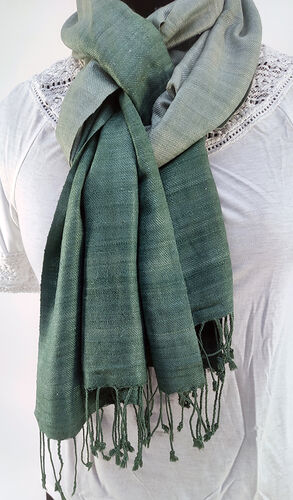
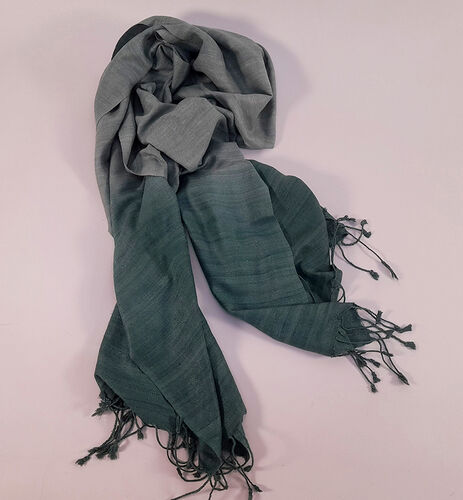
The subtle shading from dark green to light green of this lovely eri silk scarf is called ombré, it is achieved by acarefully timed, hand dipping dye process.
This scarf can we worn tied like this or draped as a stole and is equally attractive on both men and women.
Size: 50x200cm
Material: 100% silk
Care: Something as beautiful as hand woven silk deserves gentle handling. We advise dry cleaning but if that is impractical then a cool, very gentle hand wash and cool iron are recommended.
Code Number: 2822569
FOB Price:
Euro:9.65
GBP: 8.35
US$: 10.59
Aus$:16.70
Prices may change so please confirm prices at the time of ordering
Made in Little Flower workshop in N. India.
************************************************************************************
Little Flower Workshop

Little Flower Leprosy Rehabilitation Centre is in Raxaul, Bihar, N. India. Men and women hand spin silk yarn, and then weave it into scarves and throws. They also weave cotton fabric for scarves and napkins and towels.
The center provides vital employment for people who would otherwise find it very difficult to find work because of their association with leprosy.
Little Flower buys eri silk cocoons from small farmers in Assam. Traditionally eri silk worms are extracted from the cocoon so there is no silk worm destroyed in the production of this silk. The cocoons are degummed in boiling water and washed and then spun by hand into thread for weaving. Using those hand spun threads to weave fabric creates gorgeous, slubby textured cloth.
For more details about Little Flower click here
Impact
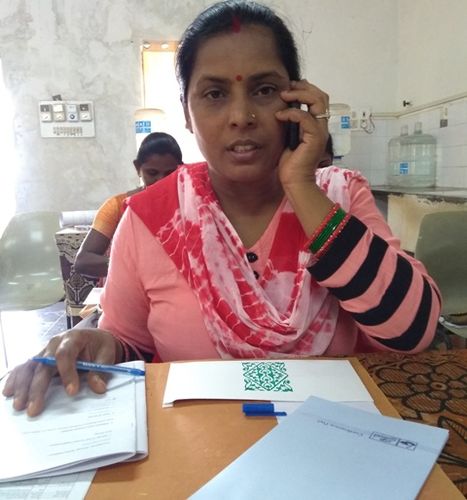
Many of the artisans in Little Flower are family members of people affected by leprosy. Sita Devi is one example.
She joined the department and was asked to learn spinning of silk from the silk cocoons.
“My father-in-law was furious with me for going to work and locked me out of the house for two days, Brother Christodas found out and convinced my father-in-law to let me work and live at home, but there was too much tension in the house because I had gone against his wishes and eventually the colony elders allocated a separate house for my husband and me and our children.”
“I worked for a while on the colony farm but I could not keep the children with me in the rain and so I returned to the weaving unit. I had to work hard to keep up the number of pieces per day as we were paid piece rate.”
Now Sita is one of the supervisors in the unit responsible for monitoring production. Read more about Sita here.